
Azimut SDK: One Hardware Platform Behind a Virgin Mobile eSIM Kiosk
Published: 16/10/2026
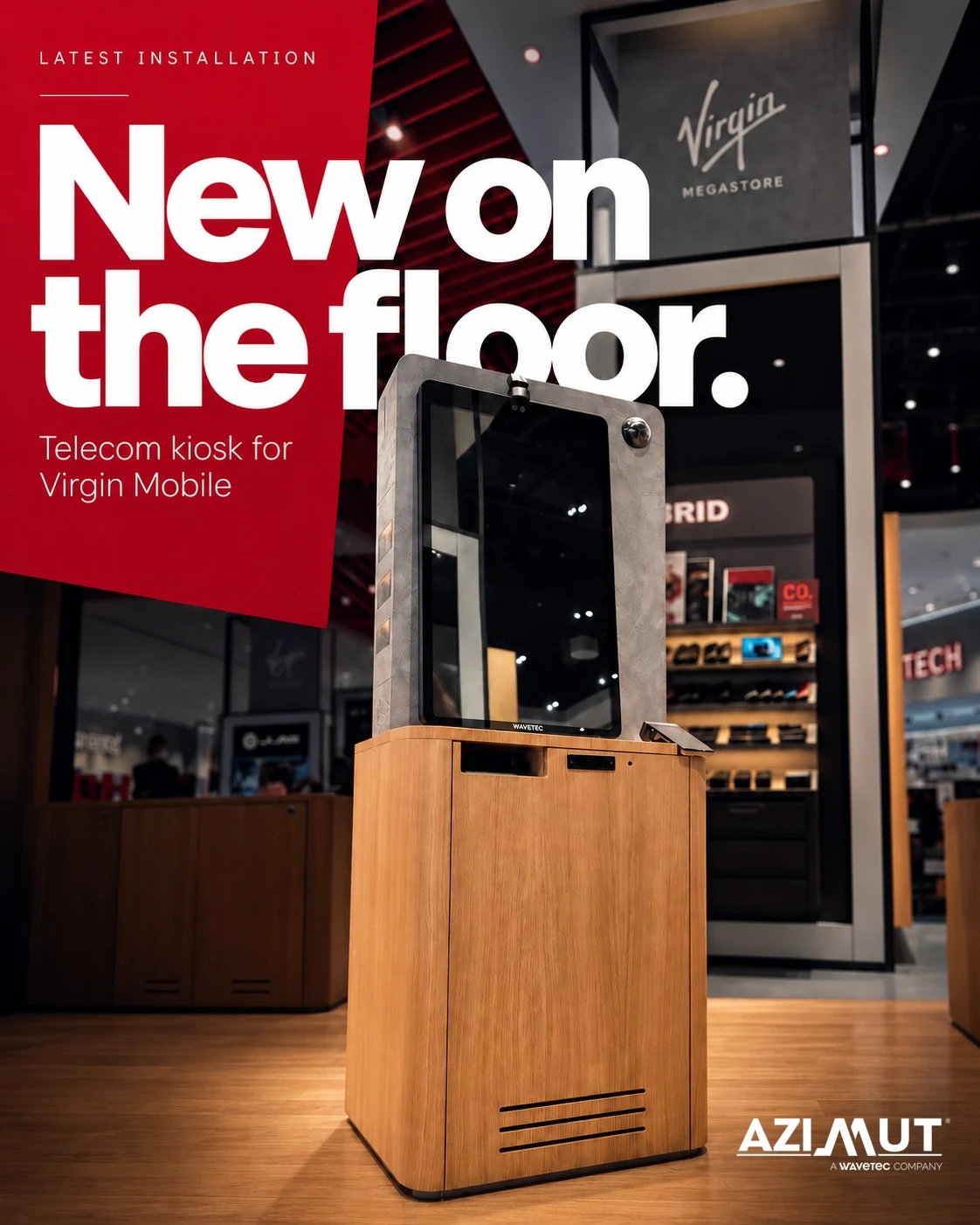
A self-service kiosk brings several technologies into one customer journey. The screen may be the part customers see, but the application also has to communicate with physical devices, handle their status and recover when something goes wrong. Each hardware model can have its own protocol. Azimut SDK gives application teams one consistent way to work across them.
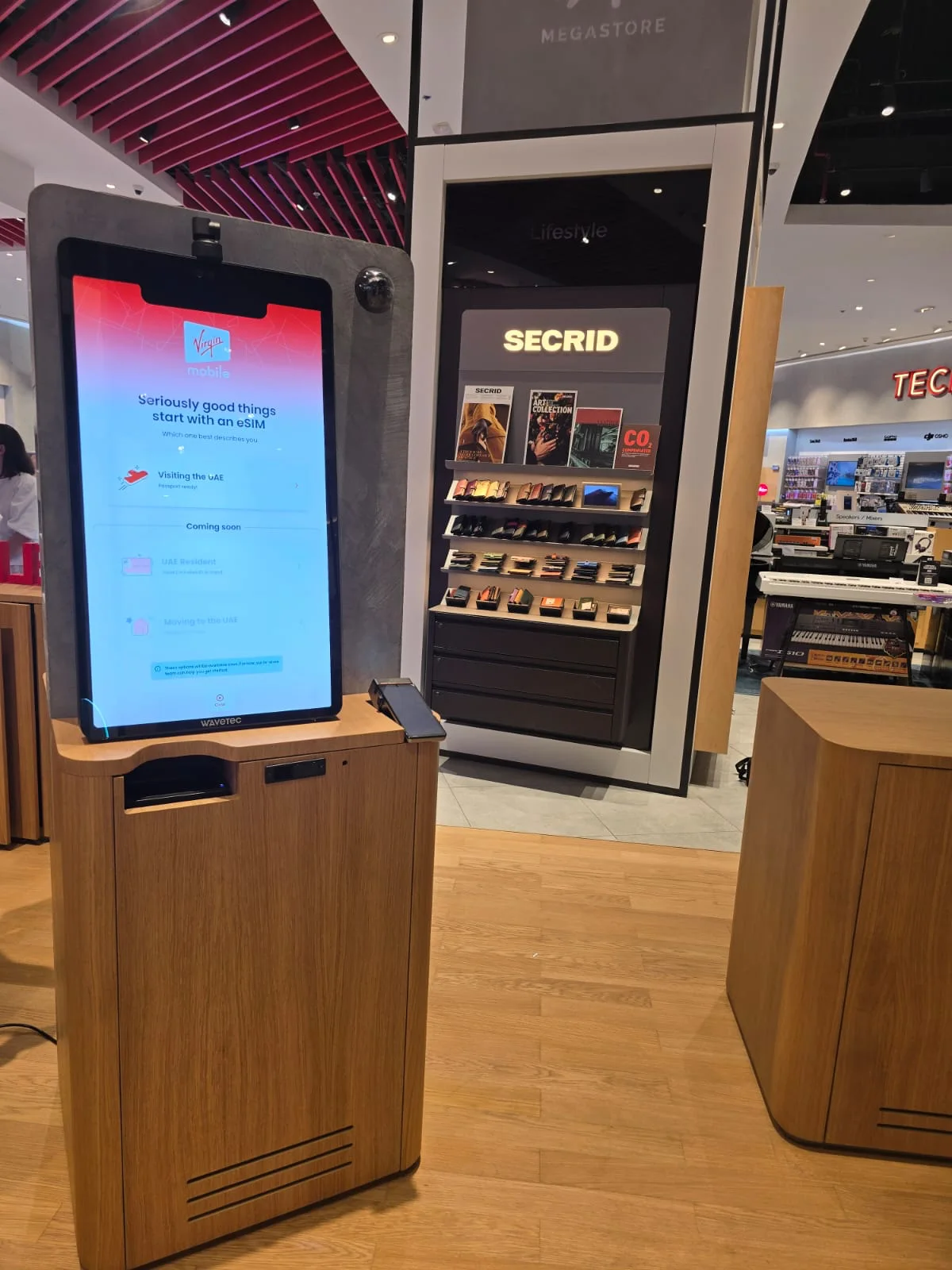
Virgin Mobile's self-service eSIM kiosk is a visible example of that approach to telecom self-service. Virgin Mobile provides the customer-facing experience; Azimut engineered the middleware and core software behind the kiosk's digital journey. Customers can start at the touchscreen and complete the steps to receive an active eSIM on their phone, without collecting a physical SIM card. The SIM issuance workflow shows how a kiosk can bring identity checks, provisioning and activation into one journey.
One JSON API, many device models
Azimut SDK sits between a kiosk application and its supported hardware. The application calls a stable JSON API to request a device operation and receive its outcome. The SDK handles the driver and low-level communication with the attached model, along with device readiness, session lifecycle and health reporting.
Because the API uses HTTP and JSON, teams can call it from C#, Java, Python, Node.js or another language with an HTTP client. They can build the service around their own application stack without taking on a separate hardware protocol integration for every device.
The same contract across application stacks is explored further in one JSON API for every language.
When a deployment introduces another supported model, the device driver can change while the application keeps the same API contract. A model that is new to the catalog may need a driver added first. That separation makes it easier to expand a kiosk estate or adapt a workflow to the hardware available at each site.
Hardware for more than one kind of kiosk
The SDK supports a broad set of device families across self-service projects:
- Identity and capture: document readers, barcode scanners and biometric scanners.
- Payments and cash: payment terminals, cash acceptors, cash dispensers and coin devices.
- Issuance and output: SIM printers, card issuance modules and receipt printers.
A telecom kiosk selects the devices its journey requires. A banking, retail or government kiosk may use a different combination. The same platform lets application teams connect those workflows to supported hardware through a shared interface. The list describes the SDK's wider capabilities, not the exact components inside the Virgin Mobile kiosk.
Explore the wider range of hardware integrations available to application teams.
What this means on the retail floor
For Virgin Mobile, the customer sees a guided eSIM experience. Azimut's software connects that experience to the processes required for issuance and activation, while the SDK provides a foundation for working with kiosk hardware. The value of the platform is in making the physical and digital steps behave as one service.
For teams planning a larger fleet, that foundation also matters after installation. Device health and operation outcomes give support teams a clearer view of faults. A consistent application interface gives development teams room to extend the journey or change hardware without rebuilding each integration from the beginning.
For fleet-wide status, diagnostics and software releases, Satellite remote device management complements the SDK's device layer.
Learn more about the Azimut SDK, or talk to our team about the hardware and customer journeys your kiosk needs to support.
Try it yourself
Book a demo
See how Azimut SDK works in your self-service environment. We'll walk through your use case, hardware setup, and integration options.
Continue reading
Passport Reader SDK: A Practical Kiosk Integration Guide
Choose a passport reader SDK for kiosks: reader compatibility, MRZ data, capture errors and integration with y…
Integrate the Fujitsu F53 from C# and .NET
Call the Fujitsu F53 cash dispenser from C# over a JSON API: readiness checks, dispense requests, response cod…
One JSON API for Every Language
Why a kiosk platform should expose a language-agnostic JSON API instead of per-language libraries, and what th…